Lately, color has been the focus of our learning—how it mixes, how it shifts, how it transforms depending on the surface beneath it. In our previous exploration, we studied how different backgrounds dramatically change the way children perceive a hue. But recently, our classroom’s attention turned inward. This time, instead of asking, What does this color look like?, children were asking, What does this color feel like?
The story that unfolded became a reminder of how naturally children tap into emotional meaning when given space, time, and materials. Color became more than pigment; it became a language through which they communicated the invisible.
An Open Invitation: Mixing Colors to Represent Personal Emotions
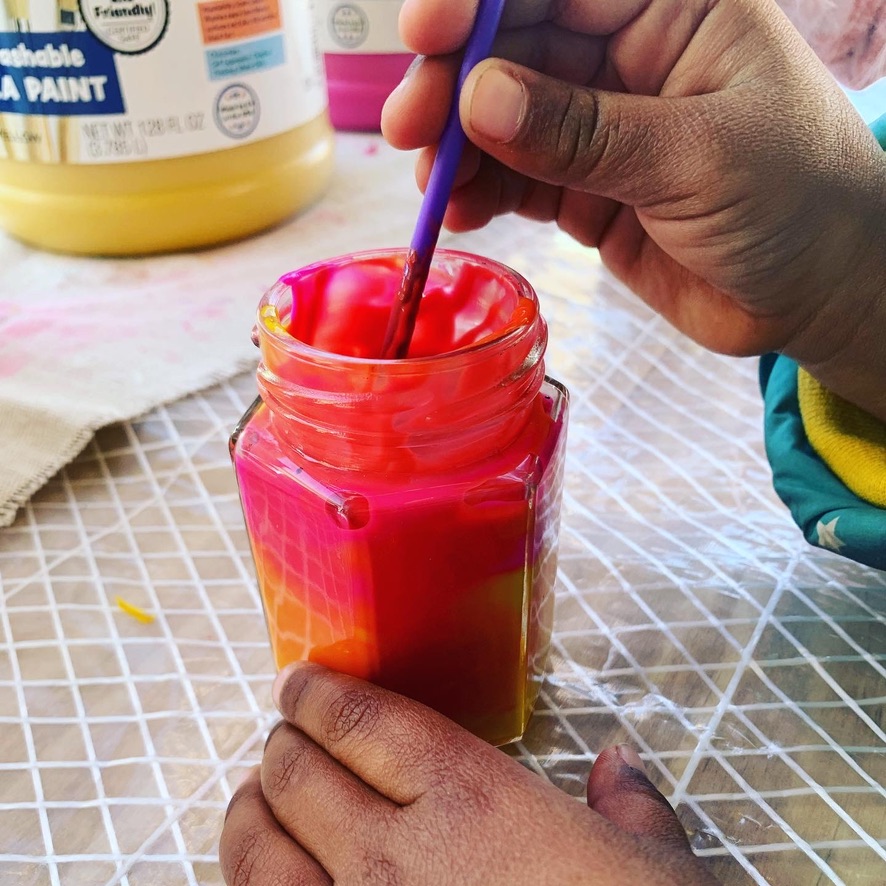
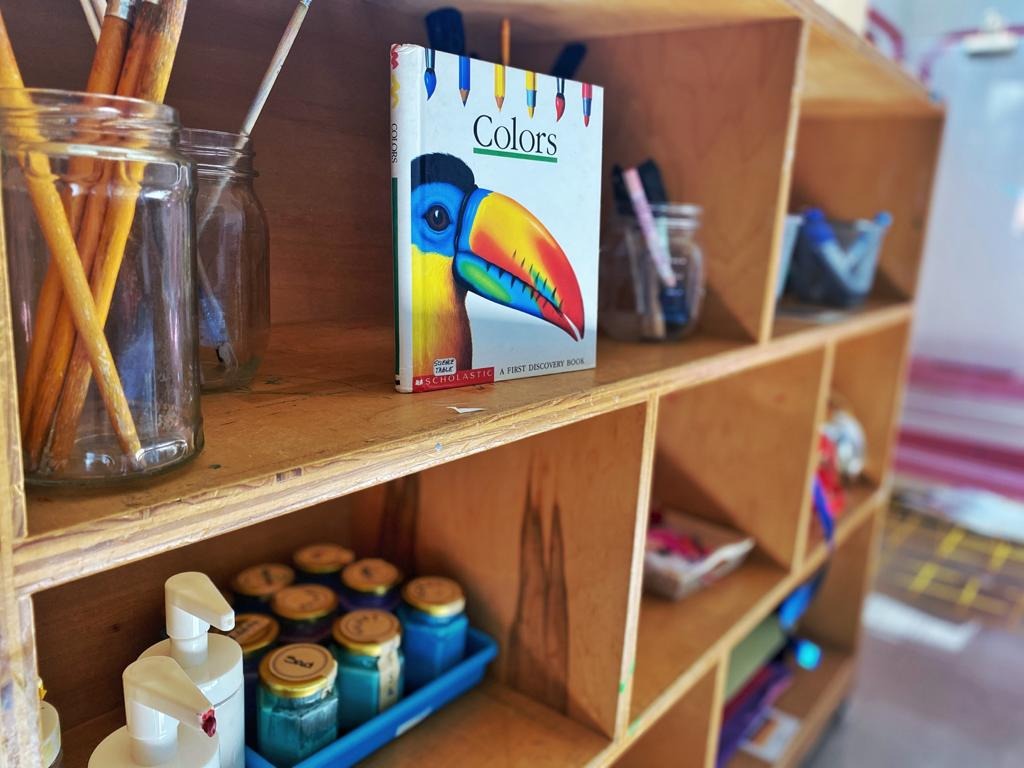
The exploration began with a simple, unforced invitation: a table set with paint in small glass hand pump containers, small jars for the children to pump paint into, paintbrushes for mixing, and room for curiosity. Children were free to join or walk away, depending on what called to them.
One by one, they came.
What emerged first was unexpected and deeply human. One child, Ella, mixed blues and greens until she found the perfect shade of teal, holding it up with delight. “This is happy,” she said softly, as though she had discovered something precious.
Next to her stood another child, Noah, working with nearly identical colors. When his mixture became the same gentle teal, he examined it thoughtfully. “Mine is bored,” he declared with total certainty.
Two children. Two experiences. One color.
Their perspectives diverged beautifully, reminding me once again that children never live in a world of absolutes. They bring nuance, memory, context—and in doing so, they redefine what we think we know.
This moment opened the doorway to something much larger.
Revisiting the Color of Emotions: A Collaborative Study
Inspired by the children’s individual interpretations, we invited the class to revisit the idea of color and emotions as a group.
Rather than choosing emotions for them, we asked: “What feelings do you want to explore?”
Their choices came quickly and confidently: happy, sad, frustrated, loved, and excited.
Then came the real work—deciding which colors represented those emotions. This wasn’t an academic exercise; it was a vivid, collaborative conversation rooted in experience.
Here are the children’s collective choices and the reasoning they shared:
Happy
The children chose two colors blue and red.
One child explained that the color blue is like the beach, where they feel happy.
Another added that the color red is like the flowers they see on the way there.
Sad
The children selected the color blue because “it’s like when the sky cries because it’s raining.”
Frustrated
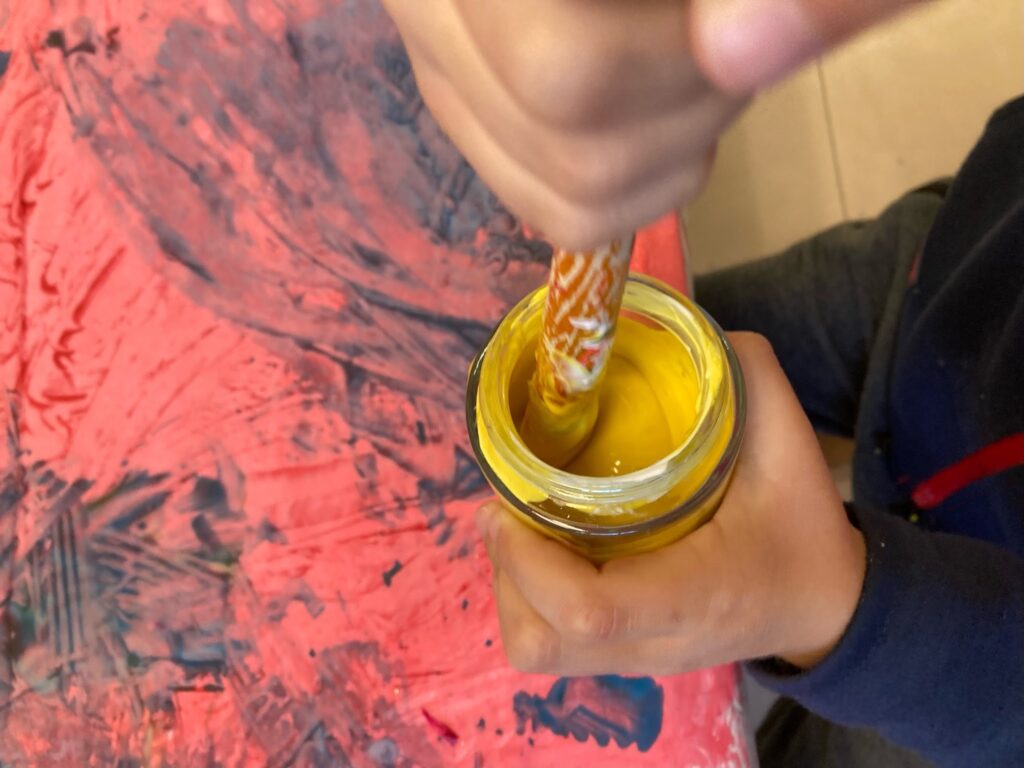
They chose yellow and orange, explaining that “it’s like the sun—our skin gets hot in the sun, and we feel warm all over when we’re mad.” Another child added, “Yeah! Yellow like when my sister knocked over my bridge. I was so mad and hot and itchy.”
Loved
They agreed on the colors pink and purple mixed together because they “feel like hugs.”
Excited
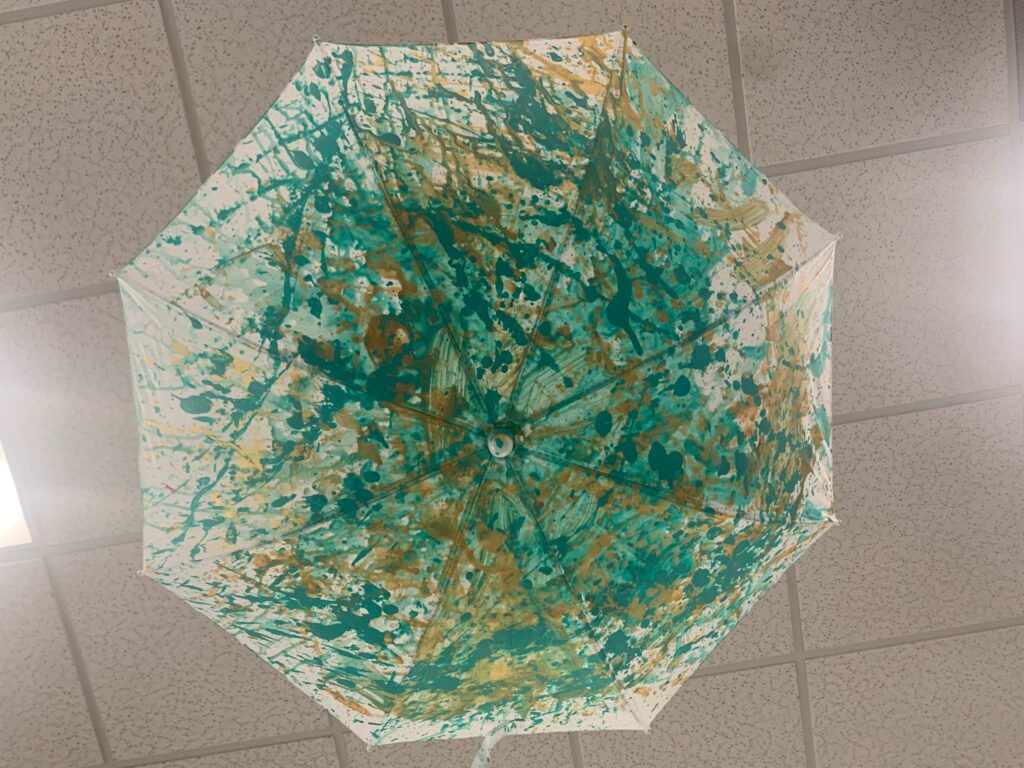
The children chose two shades of green and gold, explaining that the colors reminded them of “the grass and ‘stuff’ at dinosaur park,” a place filled with running, playing, and joyful energy.
They listened, challenged, reconsidered, and finally voted. The process wasn’t just about assigning colors—it was about collectively defining the emotional landscape of their classroom.
Here was emotional literacy in action: children naming feelings, relating them to sensory memories, and hearing how others experience emotions differently than they do.
Painting Feeling Into Form: Jackson Pollock–Style Umbrella Art
Once color–emotion pairings were established, we shifted into the physical, expressive part of the experience: painting umbrellas Jackson Pollock–style.
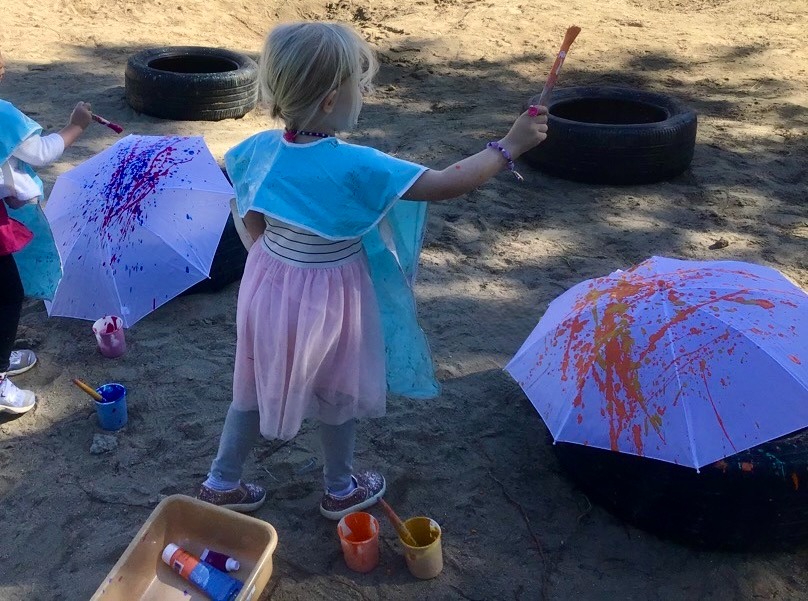
We placed the umbrellas in the sand so the children would have plenty of space to express their feelings as they painted. We then invited the children to use flicking, dripping, and sweeping motions to bring those feelings to life.
Happy splattered in bright, energetic bursts of beach-blue and flower-red.
Sad dripped slowly, creating long streaks that resembled rainfall.
Frustrated hit the canvas with force—bold strokes of hot yellow and fiery orange.
Loved spread softly, layering pinks and purples in gentle washes.
Excited danced across the umbrella surfaces in flicks of grassy and mossy green with flecks of gold.
The umbrellas transformed into visual emotional stories. Through paint, children expressed what they could not always put into words. Through movement, they released energy, tension, and joy. Through collaboration, they deepened their understanding of each other.
And by the end, something inside the class felt different. Lighter. Calmer. More connected.
Building the Foundation for Emotional Intelligence
This work was so much more than an art project. It was a developmentally meaningful way for children to:
- recognize their own emotions
- label those emotions in personally relevant ways
- understand that others may feel differently
- build empathy through dialogue
- express feelings with their bodies and materials
- process emotions external to the self
When children learn to do this through accessible mediums—like color and movement—they build neural pathways that support lifelong emotional intelligence. They learn that feelings are not only allowed but worthy of exploration. They learn that emotions have texture, weight, rhythm, and color.
And they learn that they are not alone inside their experiences.
A Call to Action for Educators
As educators, we must continue creating opportunities for children to understand themselves more deeply. This work does not happen by accident; it requires intention, presence, and a willingness to let children lead.
Let us commit to:
- offering invitations—not requirements—that allow children to explore their emotional worlds
- providing open-ended materials that encourage expression
- engaging children in thoughtful conversations about how they feel
- validating multiple perspectives, even when they contradict each other
- designing environments where emotional exploration is just as valued as academic learning
Children are constantly communicating through color, movement, sound, and story. When we slow down to notice, the classroom becomes not just a place of learning—but a place of becoming. Every teal, every splash, every flick of paint is a reminder:
Children are telling us who they are. Our responsibility is to listen.
Read More
Order the Book