
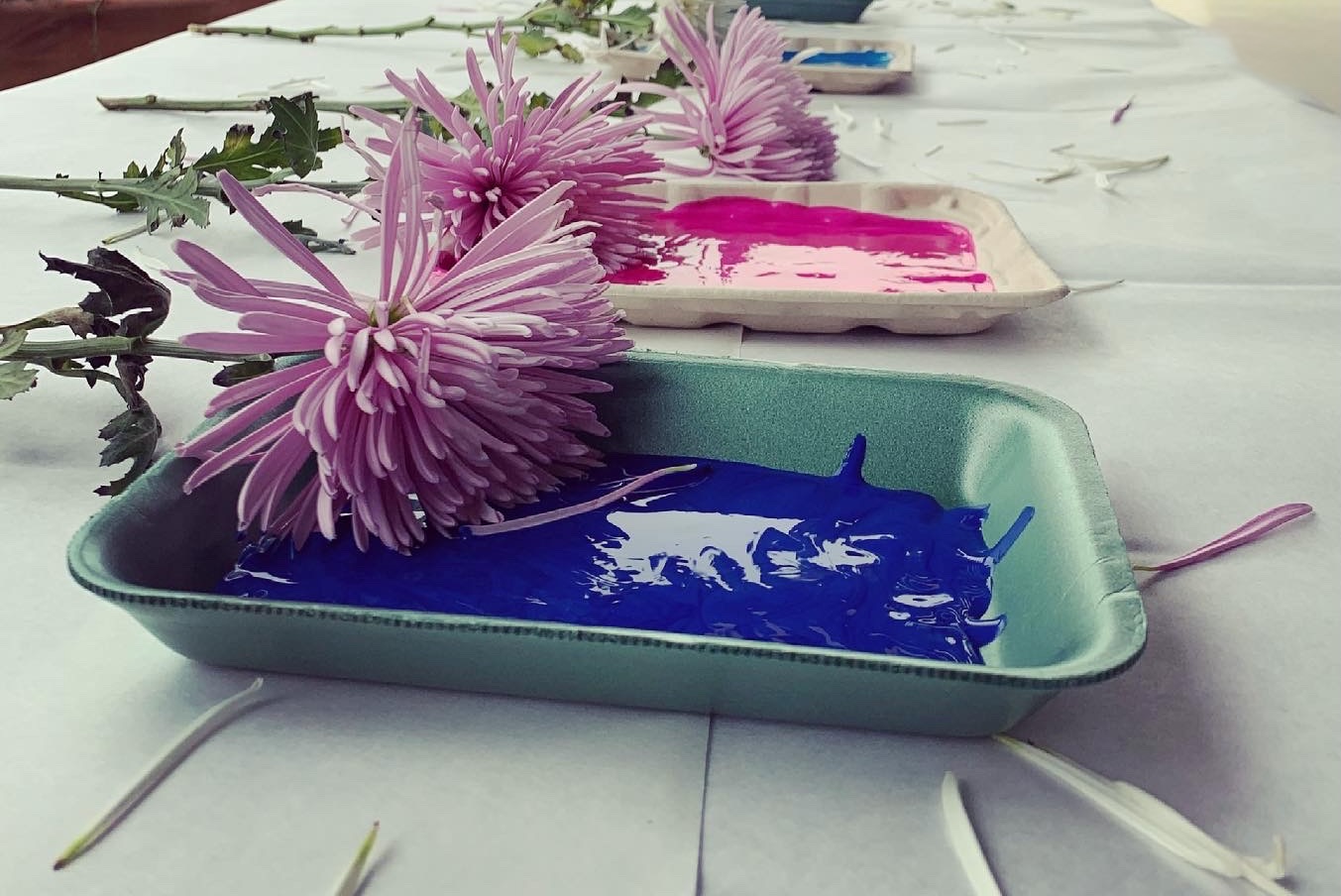
Learning is not linear.
Learning is not circular.
Learning is messy.
The Revisiting Journeys Framework begins with this understanding.
Yet many educational systems are built on the assumption that learning should move forward in predictable, orderly ways. We plan experiences with clear beginnings and endings. We expect outcomes to appear on schedule. We measure progress by how quickly children move on.
Revisiting Journeys disrupts this belief.
Rather than positioning learning as something that advances step by step, the framework understands learning as an evolving process—one shaped by time, relationships, and lived experience. Ideas are formed, tested, abandoned, returned to, and reimagined. Understanding deepens not because learning moves forward, but because it is revisited.
This kind of learning often begins quietly.
A walk outdoors. Children slow near a cluster of fallen petals—yellows, purples, soft reds pressed into the ground. Someone names a color. Someone else holds up a leaf and wonders why two greens do not match. Another child turns a petal toward the sun, watching how the color shifts in the light.
Nothing is introduced. Nothing is concluded.
The educator notices not just the colors being named, but the curiosity beneath them. The lingering. The comparing. The return to the same place again and again.
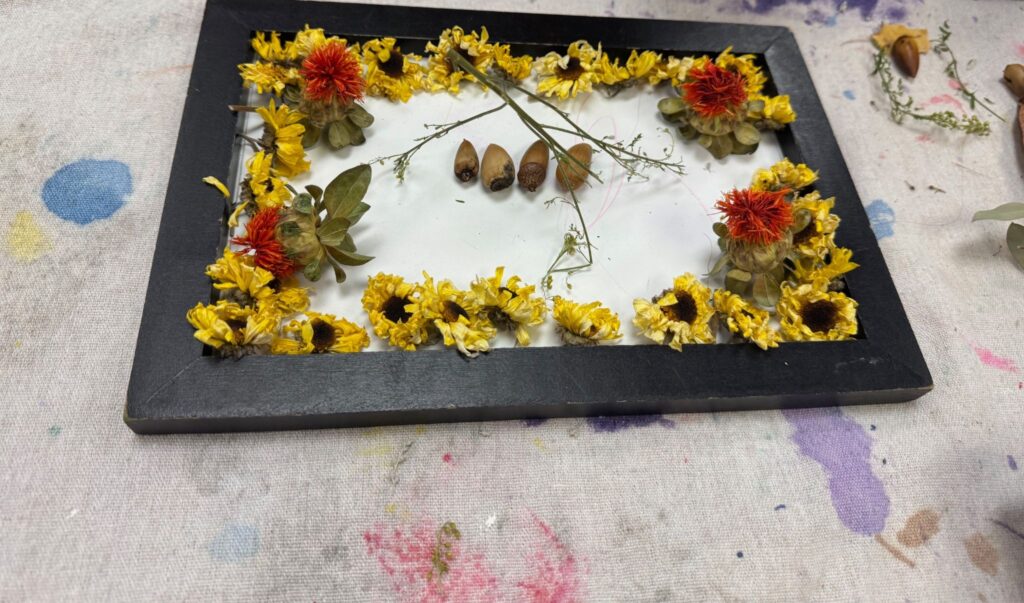
Linear Planning vs. Revisiting Journeys
Linear planning assumes that learning happens step by step. Experiences are designed to lead toward predetermined outcomes. Once an activity is complete, learning is considered finished. The role of the educator is to move children forward.
Revisiting journeys assume something different. Revisiting creates pivoting points—moments where children rethink, rediscover, and redefine what they thought they understood.
Learning is sustained. Experiences are designed to be returned to. Ideas remain open. The role of the educator is not to advance the journey, but to remain in relationship with children’s thinking across time.
The next day, the petals reappear indoors. Not as a planned lesson on color, but as an offering. They sit near paper, near clay, near a window. Children recognize them immediately.
“This one changed,” a child says, noticing that yesterday’s bright petal has darkened.
A theory begins to form. Maybe color moves. Maybe it fades. Maybe light matters.
In linear planning, clarity comes from closure.
In revisiting journeys, clarity comes from depth.
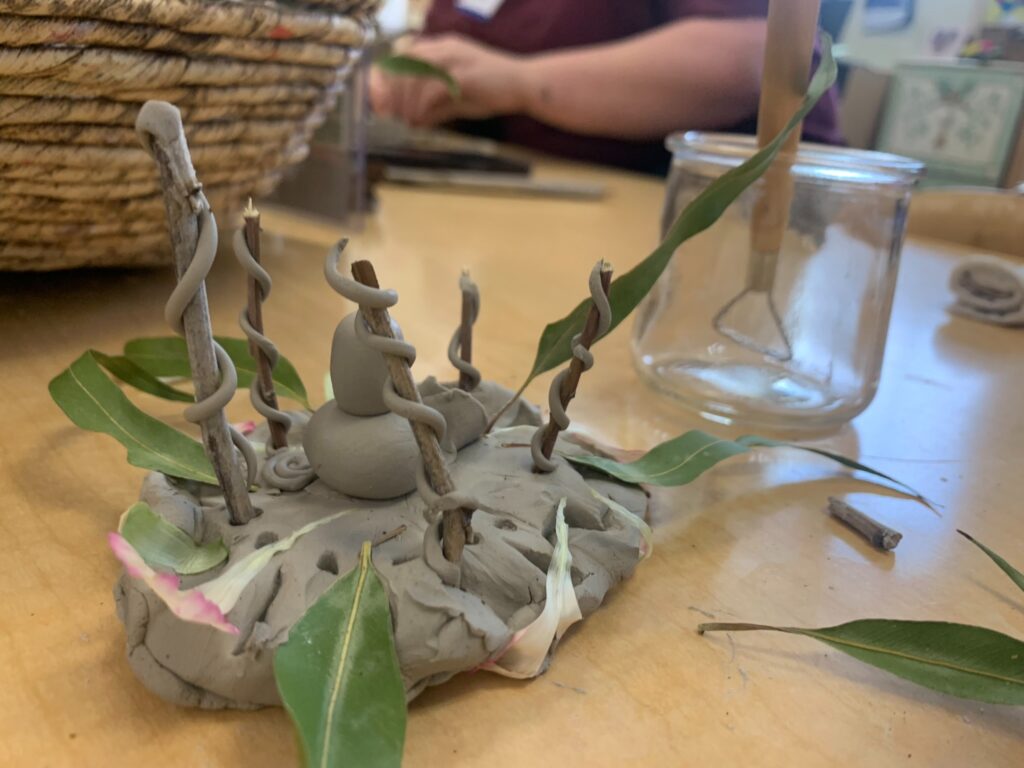
Revisiting Is Not a Strategy
Revisiting is not something educators do after learning has occurred.
It is a way of being in relationship with learning.
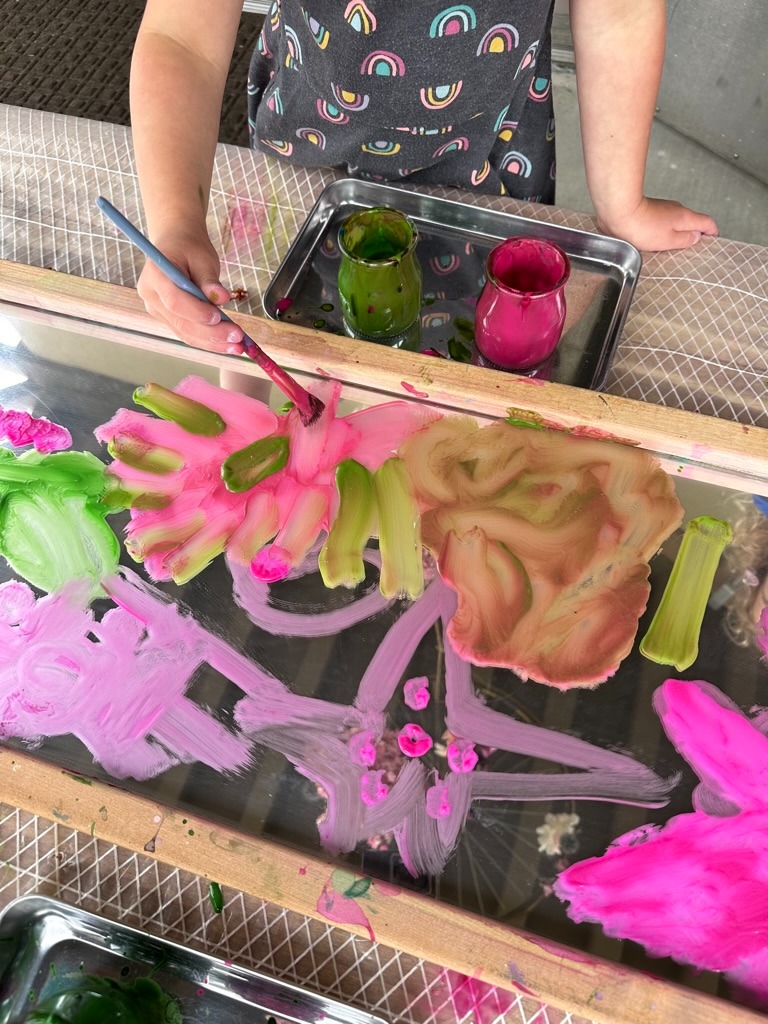
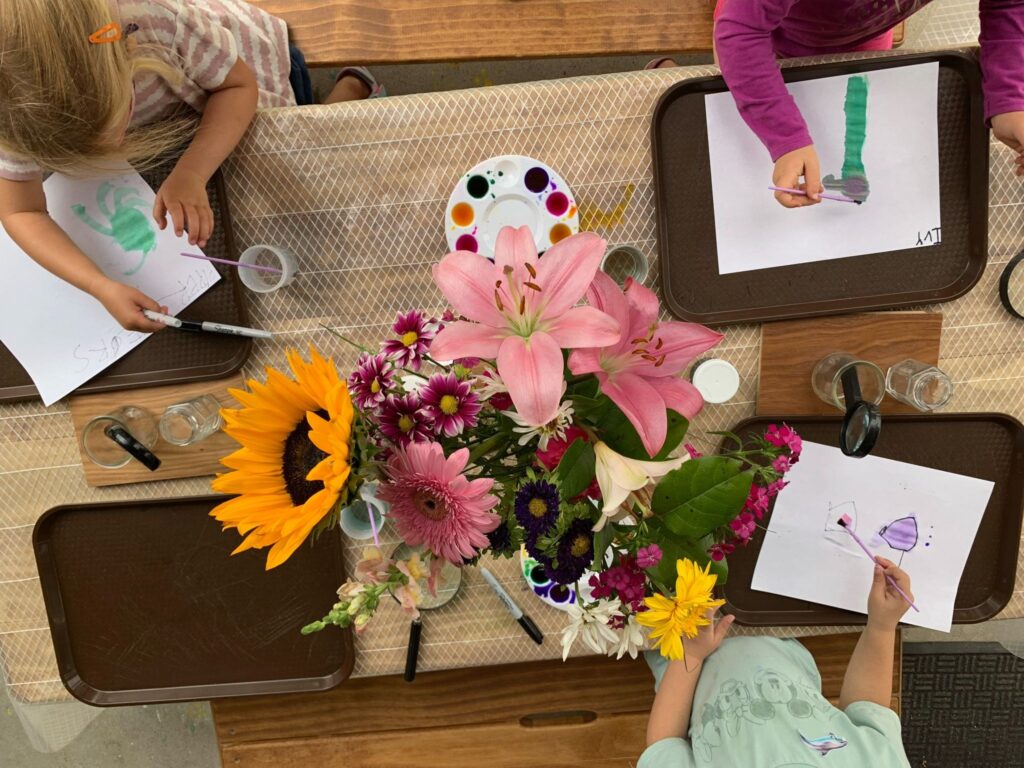
As the days pass, color continues to resurface. Paint is introduced—not to teach mixing, but to test ideas that already exist. Children search for matches. They hold painted swatches next to petals. Some are satisfied. Others return to the paint.
“It’s close,” one child says, dipping the brush again.
As children compared petals, paint, and shadow, they engaged in inductive reasoning—hypothesizing, testing theories, and revisiting their thinking across time.
This is not repetition.
This is not a simple return
This is revisiting.
The learning is not moving forward. It is moving inward—becoming more complex, more relational, and more intentional.
Revisiting Through Chronicles
Documenting the story’s chronicle becomes part of the journey. Documentation functions as a chronicle—making learning visible not as an outcome, but as an evolving journey.
Photographs of petals are displayed alongside early paintings. A transcript captures a child’s words: “The color changes when it gets tired.” Drawings from weeks earlier are placed back into the space.
Children pause. They laugh. They notice differences.
“That one was lighter,” someone says, pointing to their earlier work.
Documentation does not explain. It invites return.
It becomes a bridge between past and present thinking—allowing children to encounter their own ideas again, not as answers, but as living questions.
Revisiting Through the Environment
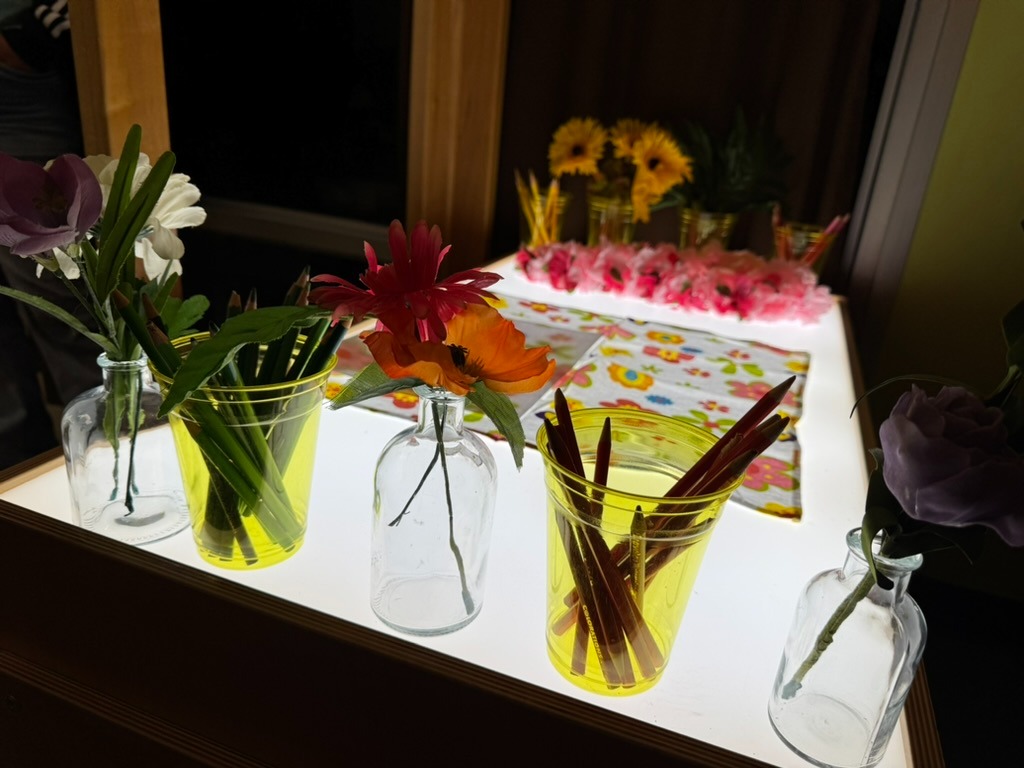
Environments designed for revisiting are intentional but unfinished. The environment functions as a responsive play ecosystem. Physical space, temporal space, and unscripted materials work together to offer affordances for return—allowing ideas to remain active rather than resolved.
Materials remain available long enough for ideas to deepen. The petals are not replaced with something new. Instead, shadows enter the investigation. Children trace leaves in the afternoon sun and notice how color becomes darker, stretched, altered.
“Why is it not the same green anymore?” a child asks.
No one rushes to respond.
The environment communicates that ideas are worthy of time. That nothing needs to be resolved too quickly.
Revisiting Through Educator Decisions
Revisiting becomes visible through educator choices.
It shows up in the decision to pause instead of redirect. To return children to their own words. To ask, What do you think now?
Rather than introducing new content to maintain momentum, educators sustain learning by honoring continuity. They trust that learning deepens through return.
The educator does not advance the journey.
They keep it alive.
As children revisit color, educators engage in parallel journeys—observing, listening, and engaging in reflective practice that informs intentional decisions over time.
Revisiting as Rigor
Rigor does not live in speed, coverage, or completion.
Rigor lives in staying with complexity. In allowing children to sit inside uncertainty. In trusting that understanding unfolds through time.
What began as noticing color in nature has become an investigation of light, material, change, and perception. No one has named this as color theory—yet children are living it. They are constructing meaning through return.
This is not accidental.
This is the work of revisiting.
Revisiting Journeys as a Framework
The Revisiting Journeys Framework offers more than a way to plan experiences. It offers a way to understand learning itself.
It challenges the belief that learning is something to be completed and moved beyond. It invites educators to design for return, to listen for meaning, and to trust that depth emerges through continuity.
When educators commit to revisiting journeys, they commit to depth over speed, meaning over momentum, and relationship over resolution.
This is how learning is sustained.
This is how ideas are honored.
This is where real learning lives.
This journey weaves together learning through nature, learning through art, and learning through curiosity—each revisited and deepened across time.
An Invitation to Revisit
The Revisiting Journeys Framework invites us to pause and consider how learning is unfolding in our own contexts.
What ideas are children returning to?
Where do you see curiosity lingering rather than closing?
What might happen if you designed your environments, documentation, and decisions to hold space for revisiting rather than resolution?
This is an invitation to rethink planning, to slow down long enough to notice pivoting points, and to trust messy, nonlinear learning as a site of rigor and meaning making.
Begin by choosing one idea to stay with. Chronicle it. Make it visible. Return to it with children and colleagues. Allow it to be reimagined, redefined, and rediscovered over time.
Whether you are an educator, leader, or learning designer, Revisiting Journeys invites you into a parallel journey—one grounded in inquiry, reflective practice, and a belief in children as capable constructors of knowledge.
Stay with the learning.
Return to the questions.
Design for revisiting.
This is how learning deepens.
This is how communities grow.
This is where real learning lives.
Call to Action
Observe the children as they engage in the play ecosystem. Notice when a child is revisiting a material, space, and provocation. How might you embrace revisiting journeys with that child?
Deepen your learning with Revisiting Journeys: Understand How Children Reflect, Reimagine, and Redesign Play and Learning
Discover the Loose Parts book series and reimagine what learning can become.
Disclaimer
Revisiting Journeys™ is an original pedagogical framework developed by Miriam Beloglovsky.
The framework, its language, concepts, and structures—including but not limited to revisiting journeys, pivoting points, responsive play ecosystems, chronicling learning, and parallel journeys—are the intellectual property of the author.
This framework may be referenced with appropriate attribution.
It may not be reproduced, taught, adapted, or presented as one’s own work without explicit permission or formal training through the Revisiting Journeys Certification.
The purpose of this framework is to protect the integrity of children’s thinking and support educators in sustaining inquiry, joy, and meaning over time.